Monolithic slab or stem wall: what decides it
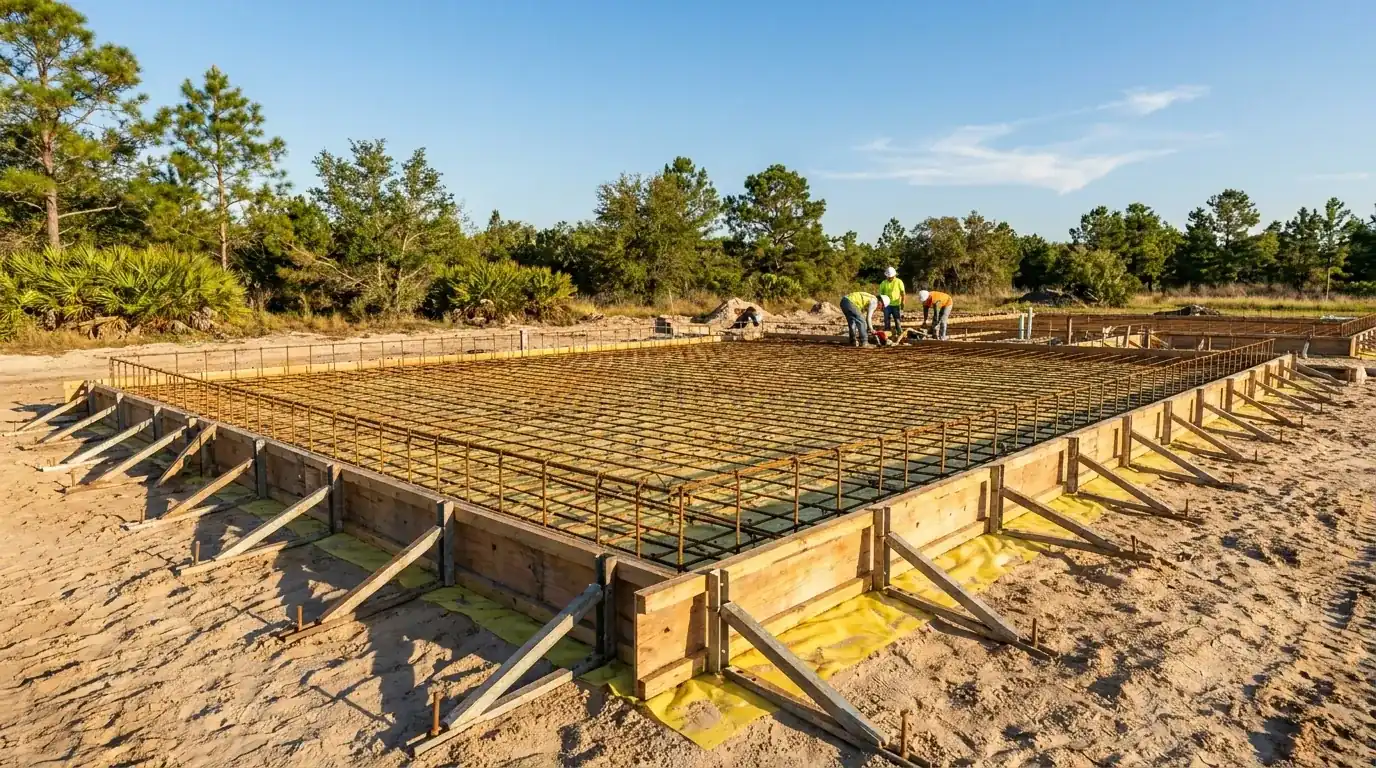
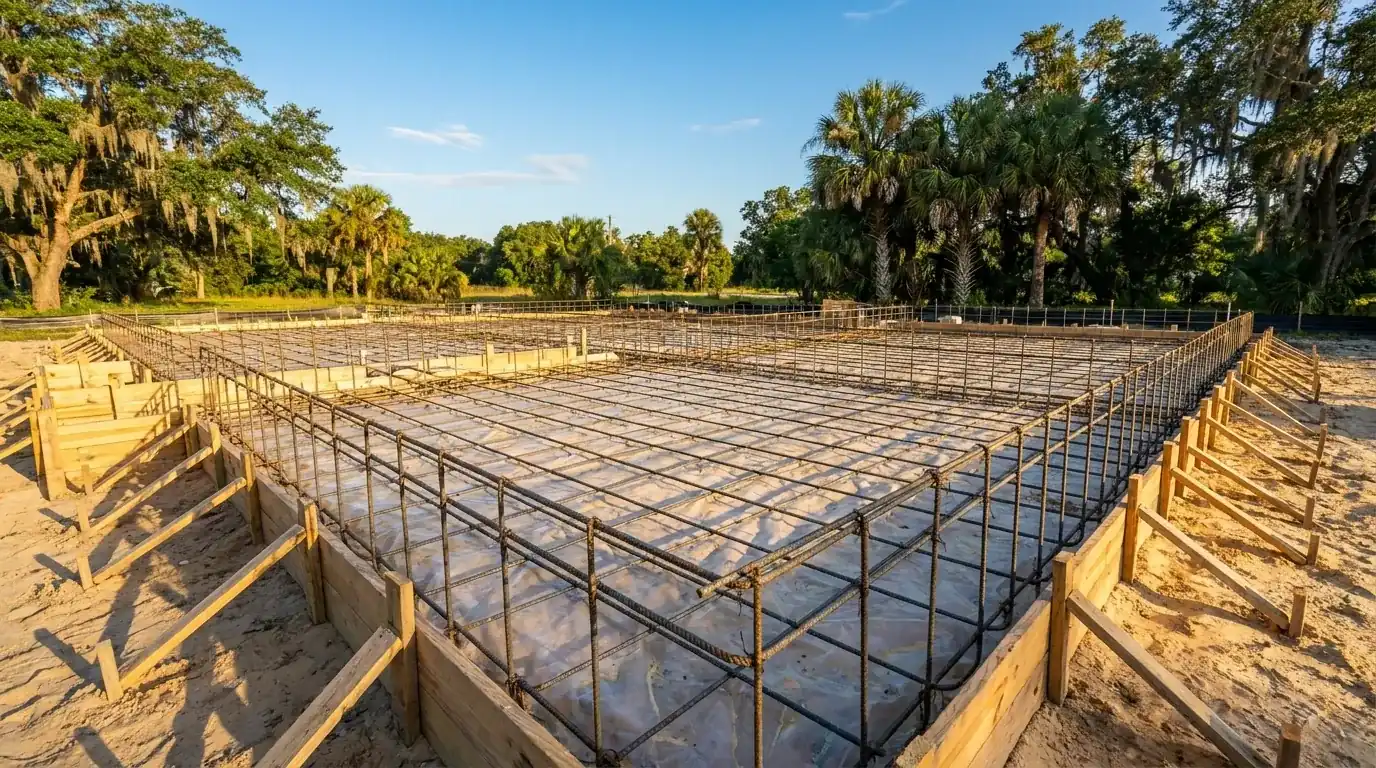
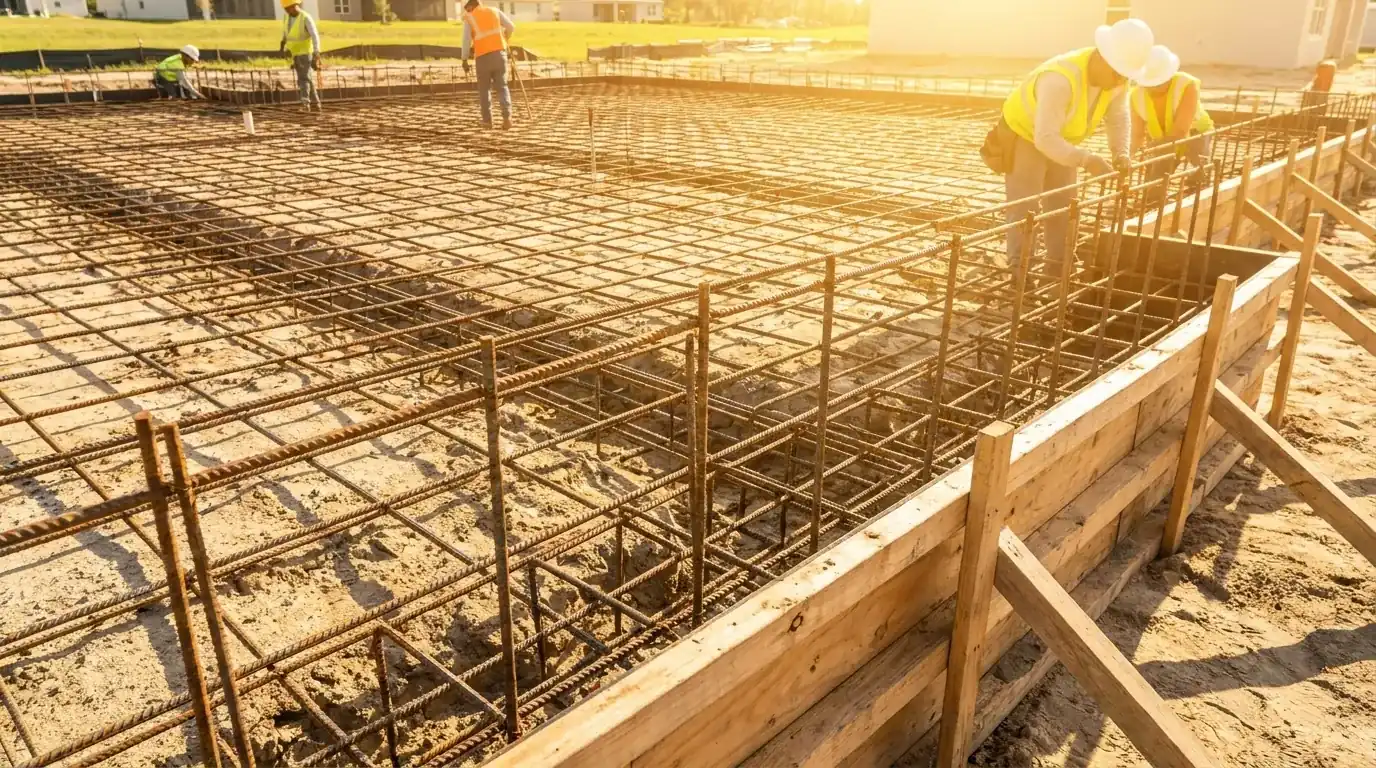
Monolithic or stem wall is the first call a concrete foundation contractor in Winter Haven makes with you. A monolithic slab places the floor and its thickened footing at the same time, so they cure as one piece. The HUD and PCA guide to concrete masonry homes names it and the stem wall with slab as the two most popular foundation types, and notes that slab-on-grade floors are common across the Southeast at about 4 inches thick, cast thicker under interior bearing walls.
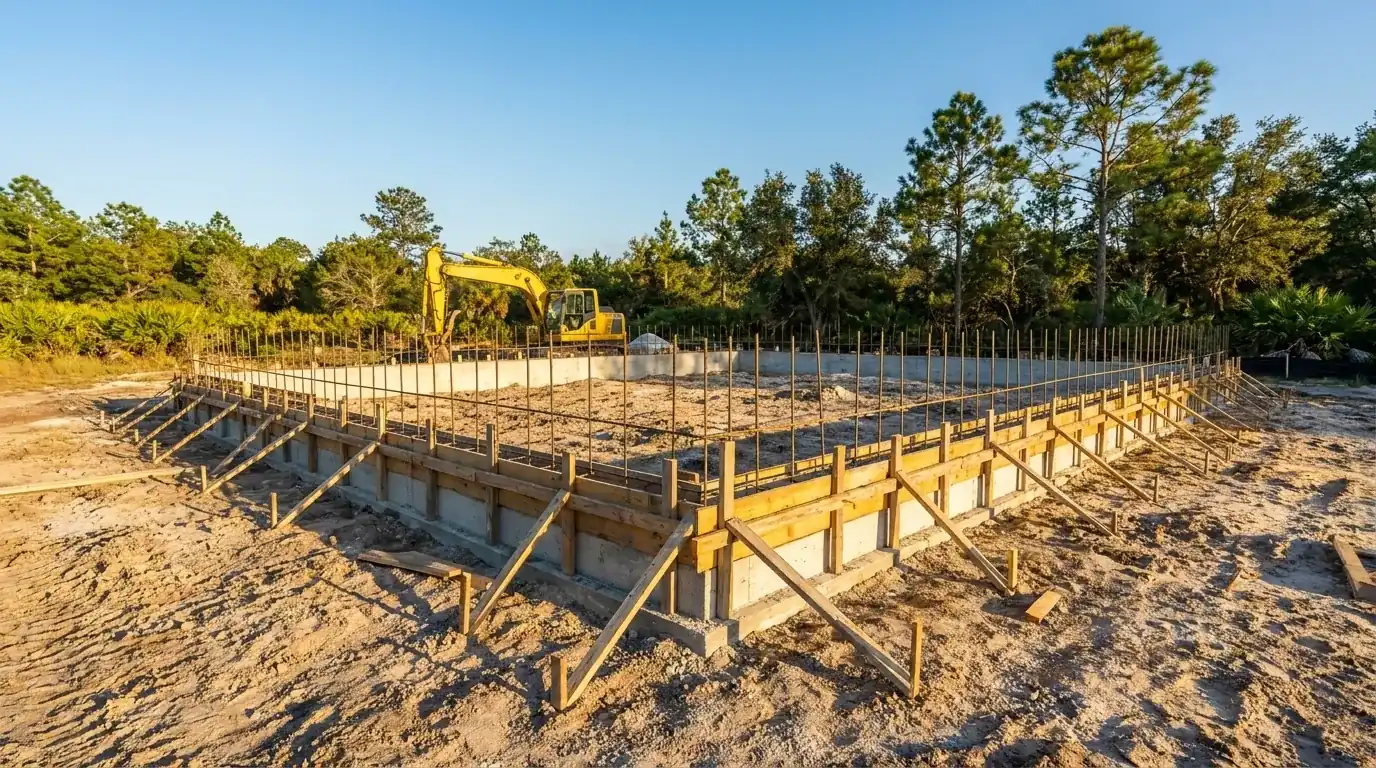
A stem wall foundation pours a footing first, builds a short wall on it, fills inside the wall and then places the slab. It costs more, at $10 to $18 per sq ft against $8 to $15 for monolithic, and it exists for one reason: the floor has to sit higher than the ground.
Around here, a flood map can be that reason. Winter Haven's Sec. 5-23 amends the building code so that in a flood hazard area the lowest floor sits at or above base flood elevation plus 2 ft. In the city's "Other Flood Areas" the lowest floor and outside mechanical equipment sit at least 2 ft above the highest adjacent grade or the 100-year elevation, whichever is higher. In an approximate Zone A with no base flood elevation, Auburndale's floodplain administrator may set it at 3 ft above the highest adjacent grade. Haines City wants habitable floors at least a foot above the nearest lake's 100-year flood level.
On a dry ridge lot outside any flood zone, a monolithic slab can do the job for less money. The engineer's plans make the final call, and we price whichever one they show.
Pricing Guide
Typical ranges, before your free written estimate.
Our foundation pricing runs $8 to $15 per sq ft for a monolithic slab and $10 to $18 per sq ft for an engineered stem wall. A monolithic slab for an addition or small house of about 1,200 sq ft lands at $9,600 to $18,000.
| Foundation | Per sq ft | Typical project | What moves the price |
|---|
| Monolithic slab, about 1,200 sq ft | $8 to $15 | $9,600 to $18,000 | Footing depth under bearing walls, fill, termite treatment |
| Room addition, 20 x 24 (480 sq ft) | $8 to $15 | $3,840 to $7,200 | Tie-in to the old footing, back-yard access for the truck |
| Detached garage, 24 x 24 (576 sq ft) | $8 to $15 | $4,608 to $8,640 | Wind design, anchor layout, door openings |
| Stem wall foundation, 1,200 sq ft | $10 to $18 | $12,000 to $21,600 | How high the floor must sit, fill inside the walls |
Every foundation is priced from the engineer's plans, so these are planning numbers only. Engineering, surveys, soils reports and permit fees vary by job. You get a free written estimate after we see the site and the drawings.
Soil reports, compacted fill and Polk's old phosphate ground
The ground under a footing matters more than the concrete in it. When a shallow foundation bears on compacted fill deeper than 12 inches, section 1803.5.8 of the Florida Building Code soils chapter calls for a geotechnical investigation that spells out the fill material, lift thickness, the density test method and the minimum density in place. The code doesn't set one percentage; the soils report does.
A concrete foundation contractor in Winter Haven deals with both kinds of ground inside the city limits. Candler sand drains fast and Tavares fine sand drains moderately well, while Hontoon muck, Kaliga muck and Immokalee sand sit wet, and NRCS rates close to 30% of sampled points in the city very limited for houses without basements. Muck under a footing has to come out or be designed around, which is why the engineer and the soils report come first.
South and west of the city the story changes again. Bartow sits in Polk County's phosphate country, part of the 1.3 million acre region FDEP calls Bone Valley, where FDEP describes draglines stripping 15 to 30 ft of overburden, clay pumped to settling areas and sand returned for reclamation. FDEP keeps a "Was My Property Ever Mined for Phosphate?" map. Check your parcel on it before a house plan goes to an engineer. About 17% of sampled ground inside Bartow is clayey Hydraquents. In Highland City, by contrast, about 62% of NRCS sample points are well or excessively drained, mostly Candler, Tavares and Fort Meade sand.
West-central Florida also sits on limestone that forms sinkholes, according to the USGS. A map can't tell you whether a lot is safe or risky. That's another job for the soils report.