Concrete Resurfacing vs Replacement: One Question Settles It
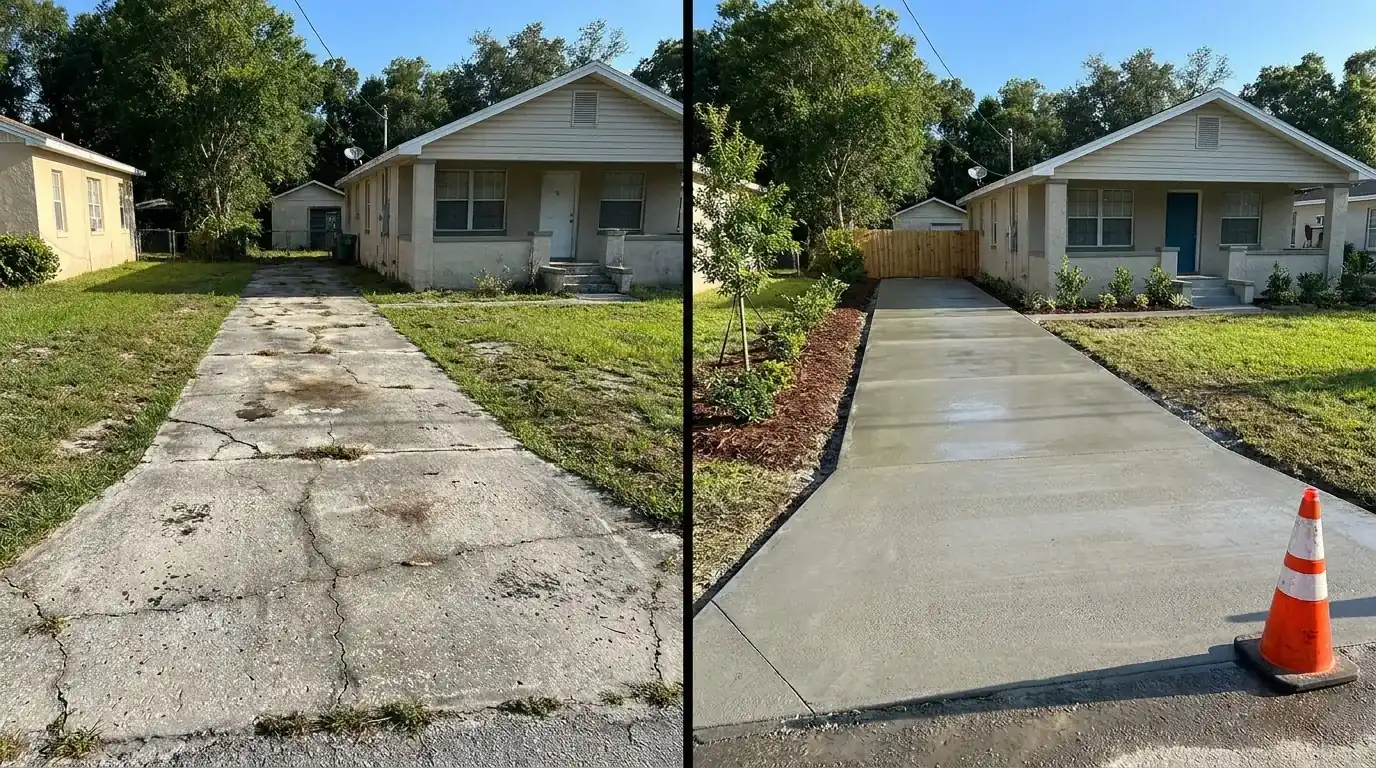
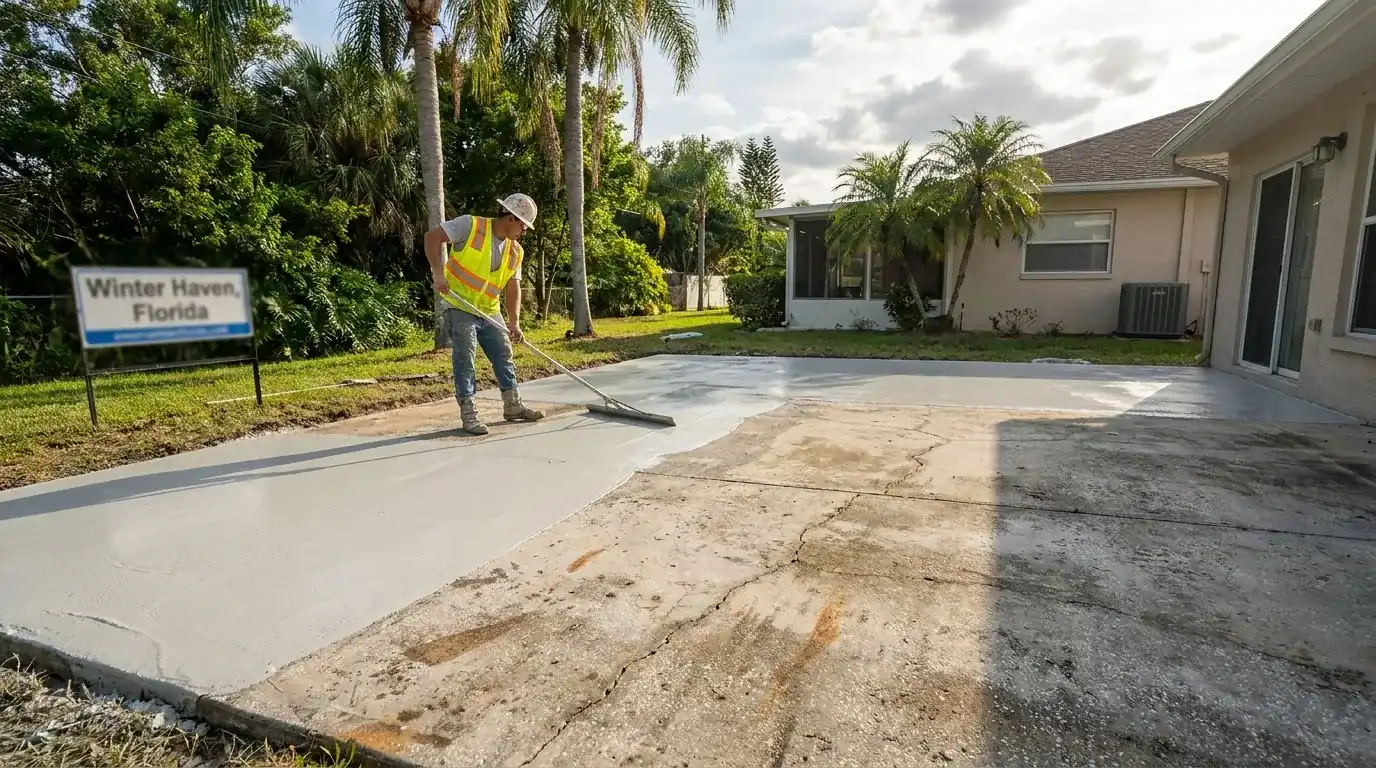
An overlay is a thin new surface glued to the slab you already have, so it can only be as good as what it's stuck to. When the slab is level and solid and just stained, worn or crazed, resurfacing makes it look new for a fraction of the price. When the slab has moved, the new surface hides it only until the crack comes back through. So the concrete resurfacing vs replacement call is about the slab first and looks second.
Concrete Network's resurfacing guide draws the same line. The concrete underneath has to be sound, heaved or badly cracked concrete isn't a good candidate, and an overlay won't cure a soil problem. That's why every estimate starts with one question: is this slab still sitting where it was poured? Our concrete repair and resurfacing page covers the overlay systems themselves. This guide helps you choose between them and a new pour.
Six Checks to Run on Your Own Slab Before Anyone Quotes
Grab a level and a pencil. Ten minutes gets you a long way into the concrete resurfacing vs replacement question before a contractor shows up.
- Lay a level across each crack. If one side sits higher than the other, the slab has moved. Flat on both sides points to shrinkage at the surface.
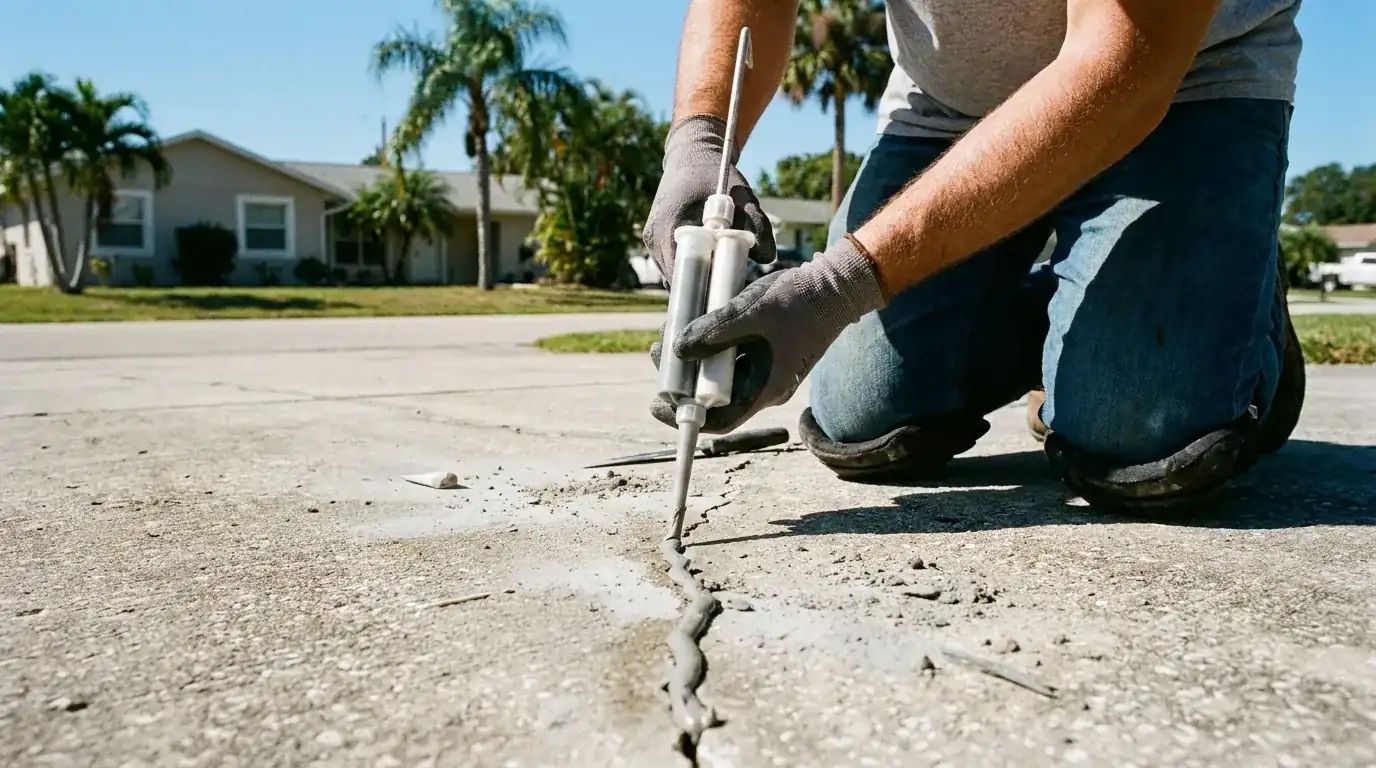
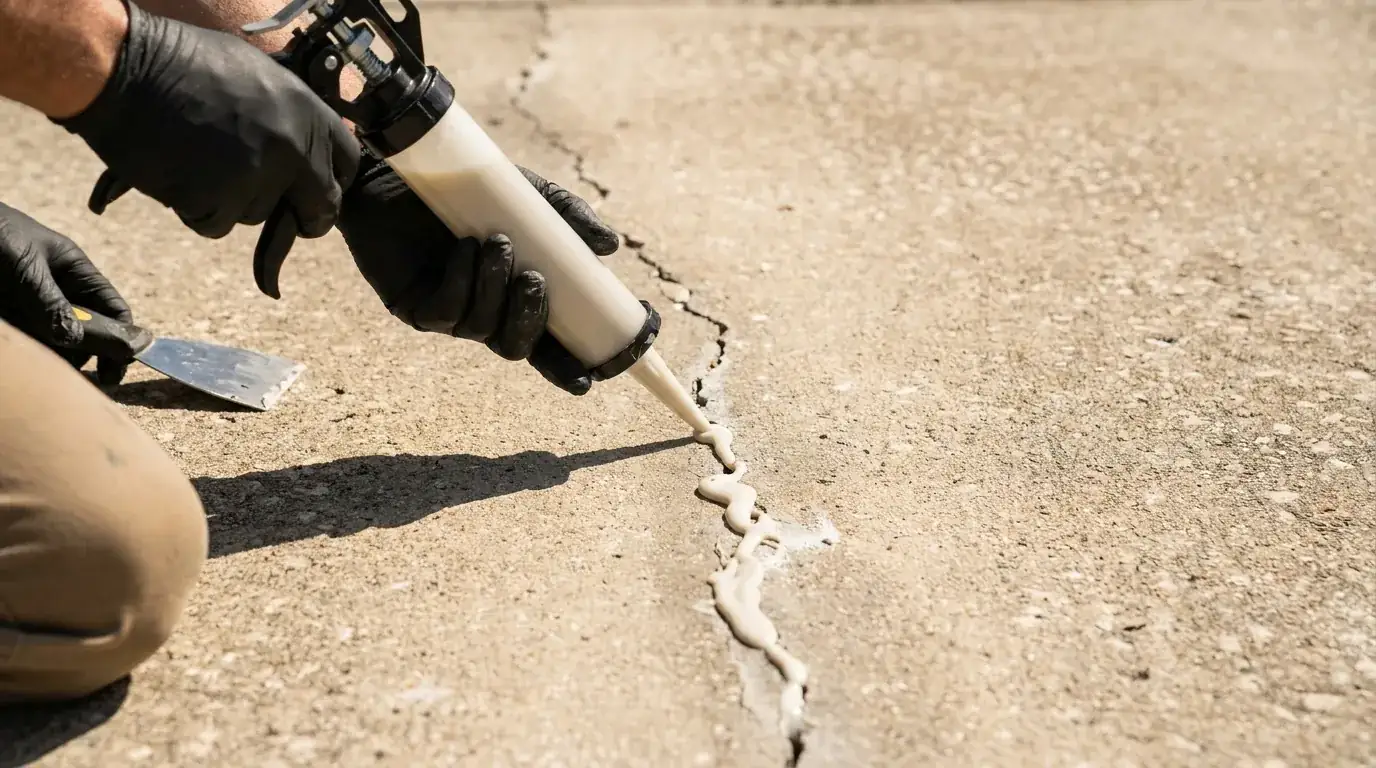
- Measure the width. Concrete Network treats cracks and holes under about 1/4 inch as patch-and-fill repairs and says wider ones can point to a bigger problem.
- Mark the crack ends and date them. Check again after a rainy season. A crack that grew is a crack that's still moving.
- Look for ridges near trees. UF/IFAS notes that live oaks planted close to driveways and sidewalks can grow roots large enough to lift and crack them.
- Watch where the water goes. Puddles on one panel, a washed-out edge or sand pushed out of a joint can mean the base is eroding. Concrete Network puts most sinking down to a poorly compacted subgrade or soil erosion, and names a leaky pipe as one cause of that erosion.
- Read the surface. Flaking, pitting, oil stains and faded color are surface wear, which is what overlays are built for.
These are our typical ranges for the jobs this guide compares.
| Job | Per sq ft | Typical project | What moves the price |
|---|---|---|---|
| Spray-texture or microtopping overlay | $3 to $7 | $1,500 to $3,500 | Crack and spall repair first, about 500 sq ft two-car driveway |
| Stamped or decorative overlay | $7 to $15 | $3,500 to $7,500 on 500 sq ft | Pattern, color and sealer on a sound slab |
| New broom-finish driveway | $8 to $14 | $5,000 to $10,000 | 4 to 5 in. slab; tear-out adds $2 to $4 per sq ft |
| New concrete patio | $8 to $14 | $2,500 to $6,500 | Size, shape and drainage; stamped is priced separately |
| New stamped concrete | $12 to $22 | $3,600 to $14,300 | Pattern, integral and release color, sealer |
Prices assume a free written estimate after we see the site. Ground problems under the slab can move any of these numbers.